“A place where rare materials can spark new thinking.” That’s how Lorrie McAllister, Dean of Hofstra University’s Axinn Library, describes the Long Island Studies Institute (LISI).
LISI holds a vast array of primary sources spanning four centuries of Long Island history, from the Revolutionary War to the events of September 11, 2001 and beyond. Yet despite the richness of these holdings, their impact has long been limited. As with many archives, LISI’s collections are physically fragile, largely undigitized, and under-described, rendering them effectively invisible to researchers and the broader public.
Activating an archive for today’s researchers requires more than digitization alone. Without description and a platform to surface materials, digitized documents can remain just as hidden as physical ones. And without preservation infrastructure, today’s digital files can quickly become tomorrow’s technical debt.
In 2026, Hofstra secured a $459,000 federal grant to support a three-year initiative to digitize LISI’s collections while building the infrastructure needed for long-term stewardship—based on a proposal that embedded JSTOR Digital Stewardship Services and JSTOR Seeklight from the start.
The challenge: Activating a hidden archive
Since its founding in 1985, the LISI has served as a center for the study of Long Island history, documenting the people and places of Nassau and Suffolk counties through an expansive repository of materials. Today, its holdings include more than 200 local newspapers on microfilm, approximately 2,500 books and printed materials, and over 600 cubic feet of manuscript collections—materials that connect local stories of family life, labor, migration, and culture to larger moments in American and global history.
Despite their significance, LISI’s collections have long lacked the infrastructure needed for broad discovery. Many items are inaccessible even within the reading room due to their fragile condition, while the absence of a modern digitization and description workflow has limited access beyond it.
“We knew the Long Island Studies Institute was full of treasures waiting to be unlocked and shared, and wanted to devote more resources to catalyzing its renewal,” McAllister said. “But to make the collections truly accessible and discoverable, we needed to start at the foundation: our technology, practices, and workflows.”
“We knew the Long Island Studies Institute was full of treasures waiting to be unlocked and shared, and wanted to devote more resources to catalyzing its renewal. But to make the collections truly accessible and discoverable, we needed to start at the foundation: our technology, practices, and workflows.”
For McAllister, a key goal was to find funding that could support more than a single phase of work, and avoid the cycle that traps many digitization projects: files without metadata, platforms that aren’t maintained, and collections that briefly become visible before slipping back into obscurity as attention moves on. If secured, a grant needed to be an infrastructure inflection point, not a one-time digitization push.
The solution: A grant to support sustainable stewardship
The opening came through Hofstra’s Associate to the President for Government and Community Affairs, who identified an opportunity to request federal funding through New York Senator Chuck Schumer’s office.
McAllister worked with colleagues across the university to shape a proposal that positioned infrastructure investments as the prerequisite for long-term public impact, including community engagement with primary sources, support for K–20 local history education, and durable public access through preservation.
To support these outcomes, Hofstra proposed a three-year transformation of how LISI collections are managed, preserved, and shared—with coordinated investment in new personnel, modernized spaces and equipment, and the technical systems needed to sustain the work.
JSTOR Digital Stewardship Services was written into the grant budget from the beginning, meeting multiple infrastructure needs through a single, coordinated approach:
- Hosted, cloud-based content management services to improve collections management and workflows
- Public access and discovery through collections shared on JSTOR
- Long-term preservation through Portico’s trusted digital preservation infrastructure
- Accelerated description and transcription through JSTOR Seeklight, the AI-assisted collections processing tool within JSTOR Stewardship
This positioning matters because grant reviewers often look closely at how work will be sustained over time, and with whom.
“I think that showing our collaboration with other institutions through the charter program, and with a nonprofit like JSTOR, added to our application,” McAllister noted.
The results: A cross-functional team and discoverable collections
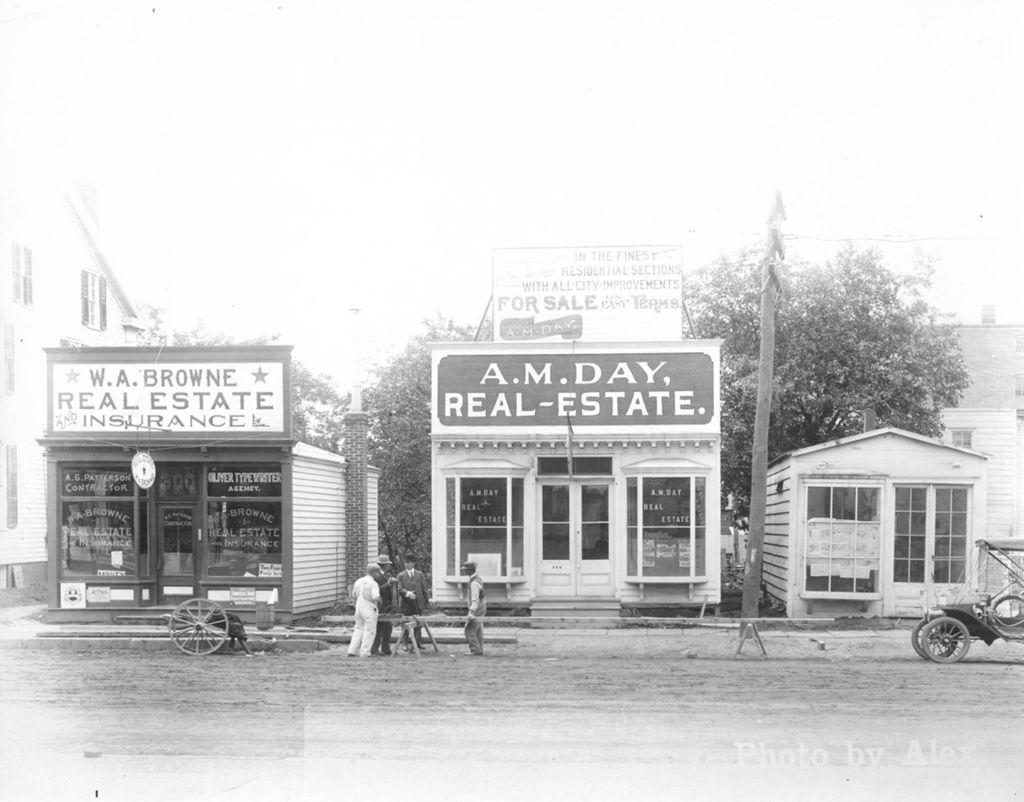
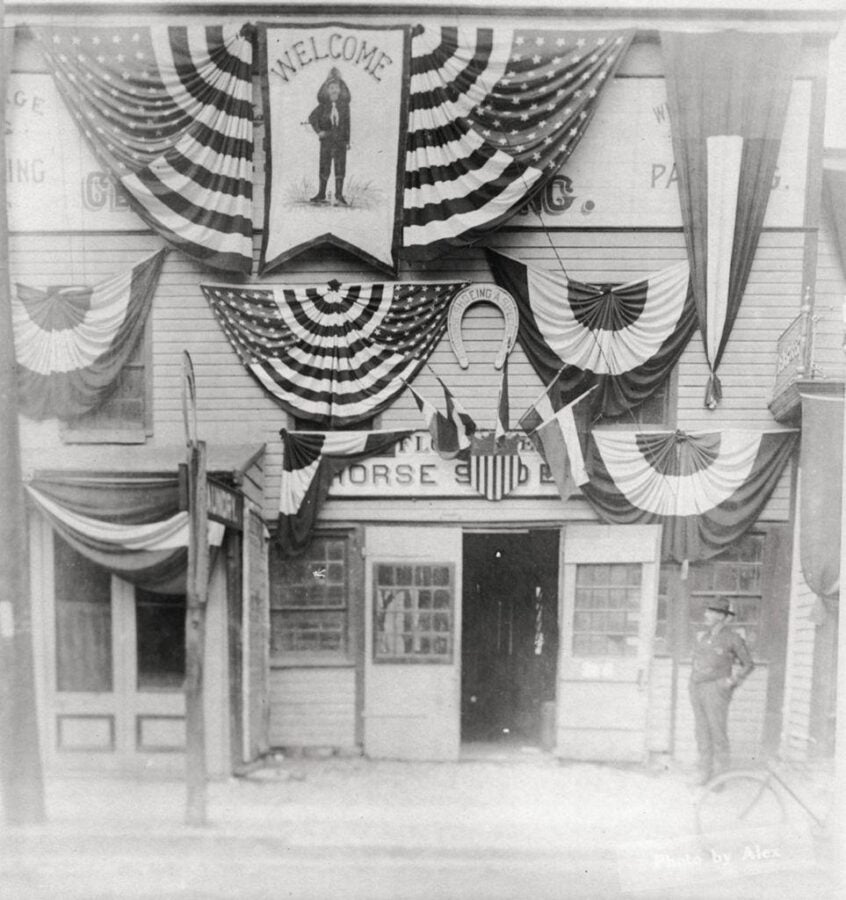
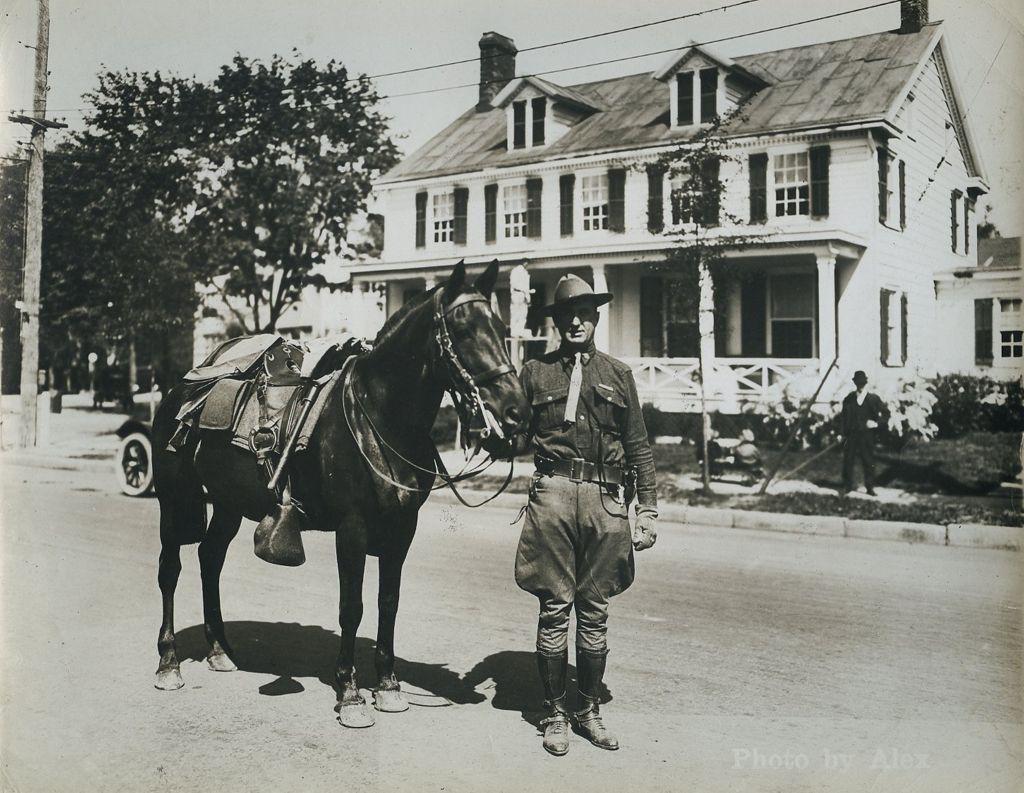
Two collections from LISI are now live on JSTOR—the Battle of Long Island and Hempstead, New York Photographs—accessible to researchers and community members worldwide. A third is nearly ready for publication: Photographs from Camp Mills, a World War I-era training center on Long Island.
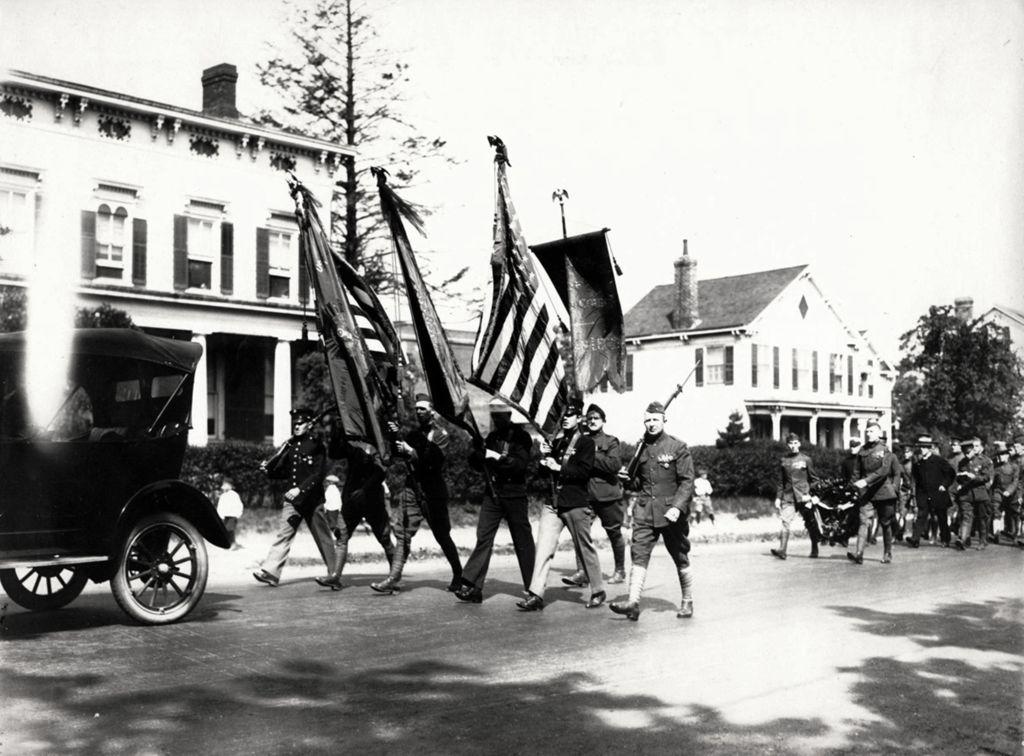
Getting here required building something new: a cross-functional team with shared practices and workflows that hadn’t existed before. McAllister brought together colleagues from Administration, Special Collections, and Technical Services to jointly rethink cataloging standards and practices from the ground up. While these groups had worked together before, this level of collaboration and coordination was new.
“I think that showing our collaboration with other institutions through the charter program, and with a nonprofit like JSTOR, added to our application.”
“We brought everyone together to think through how our existing practices and cataloging standards would be affected,” McAllister said. “We developed a project charter and new workflows together, working through examples as a team. It was a valuable process—and helped break down silos.”
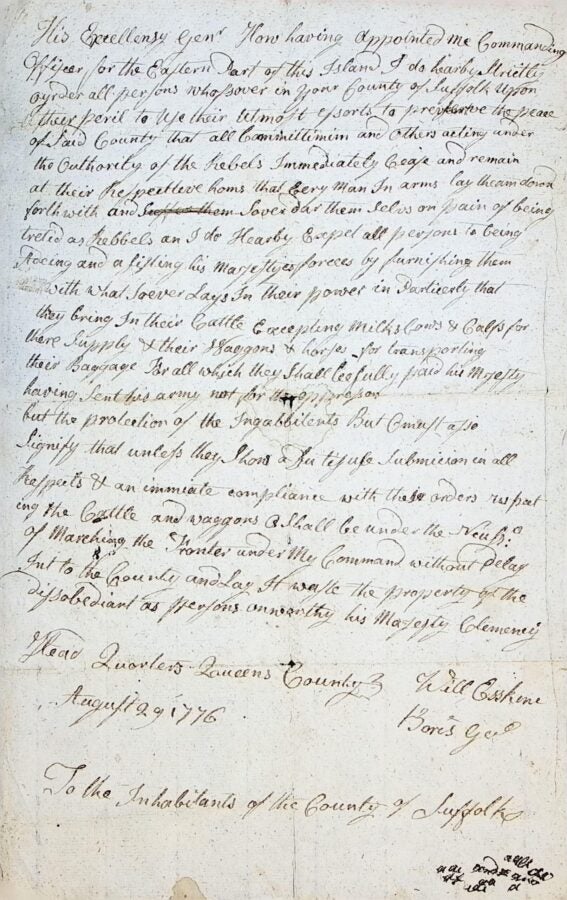
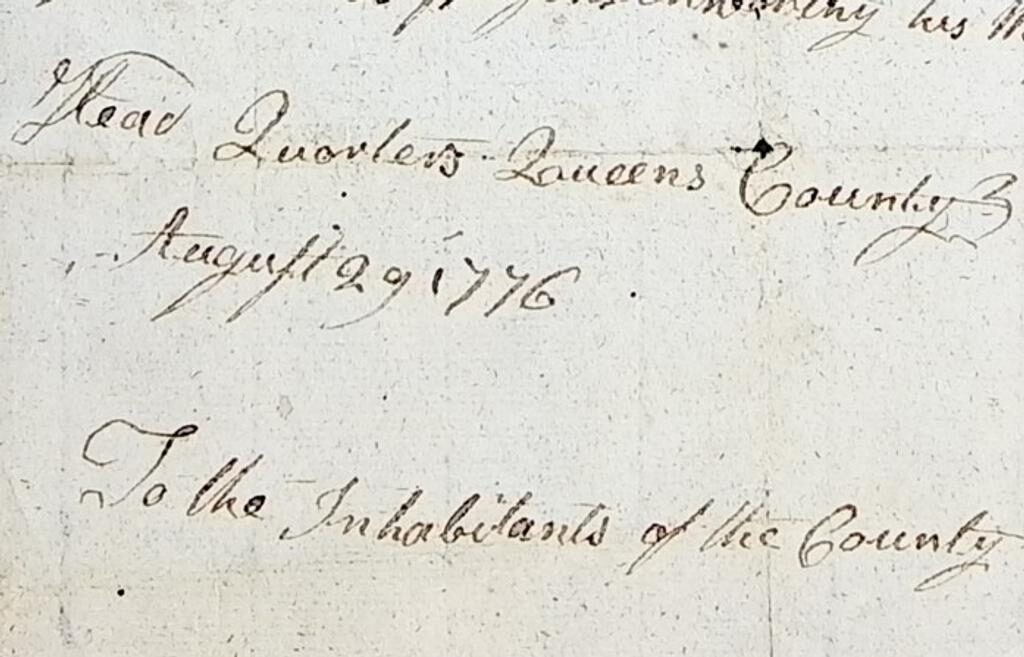
JSTOR Seeklight has been central to the new team’s work, as they deliberately test its capabilities across LISI’s range of materials. The Hempstead photographs offered an early test of AI-assisted metadata generation for historical images. The 1776 Battle of Long Island proclamation—one page, historically significant, and legible enough to verify—became the first test of JSTOR Seeklight’s handwriting transcription capability.
“The collections we’ve shared on JSTOR so far highlight both the strengths of LISI and how we’re using JSTOR Seeklight to describe photographs and transcribe handwritten materials,” McAllister said.
“The Battle of Long Island letter was a great starting point—just one page, but a major primary source document for Long Island and American history!”
The efficiency gains are real, too.
“JSTOR Seeklight is already helping reduce the time it takes to describe a given digital asset by giving us a strong starting point,” McAllister said. “It’s much easier to edit than to begin from scratch—and the time from upload to description to review is significantly shortened.”
Each subsequent collection is calibrated to push the workflow incrementally further. Next up is an 1849 diary by Gideon Smyth Nichols documenting the California Gold Rush, followed by Civil War letters from brothers Ambrose Burnham Hart and Walter Nichols Hart. The team is not only learning how to use new tools, but also documenting what they learn for the colleagues the grant will bring on board.
A model for grant-funded stewardship

JSTOR Seeklight is already helping reduce the time it takes to describe a given digital asset by giving us a strong starting point. It’s much easier to edit than to begin from scratch—and the time from upload to description to review is significantly shortened.
Hofstra’s approach offers a useful framework for institutions pursuing similar opportunities.
Key takeaways include:
- Design for sustainability, not just output: Digitization alone is not enough; long-term access and preservation need to be part of the plan from the start, not retrofitted after funding closes.
- Integrate infrastructure into the proposal itself: Embedding essential technology into the proposal ensures that foundational elements are accounted for before a single item is scanned.
- Build cross-functional collaboration early: Sustainable stewardship requires coordination across roles, not just technical implementation.
- Start small and strategically, then scale: Early wins help demonstrate value, refine workflows, and build momentum for larger-scale work.
Unlocking the archive
Over the next three years, Hofstra will continue digitizing and publishing materials from the Long Island Studies Institute, bringing centuries of regional history into broader public view.
“The outcome that matters most to me is that, three years from now, we’ve built something lasting from the grant funding—a strong set of digitized and described collections on JSTOR, and a fully staffed team with real experience using new workflows and tools like JSTOR Seeklight and Portico.”
For McAllister, success at the end of the three-year grant period isn’t defined by a single metric.
“The outcome that matters most to me is that, three years from now, we’ve built something lasting from the grant funding—a strong set of digitized and described collections on JSTOR, and a fully staffed team with real experience using new workflows and tools like JSTOR Seeklight and Portico,” said McAllister.
For institutions facing similar challenges, the lesson is clear: with the right framework, a grant can do more than fund a project. It can reshape how collections are cared for, shared, and understood.

Build lasting access to your digital collections
See how JSTOR Stewardship helps institutions build sustainable workflows for discovery, preservation, and public access.